
AWS architecture for a multi-tenant property management platform with AI workflows
Software for property management companies, landlords, tenants and caretakers. One web app, a hosted LLM inside the AWS account, and AI agents that take over the routine work.
Tenant requests are triaged, answered and routed by agents. A person approves anything that matters.
Every user sees exactly their data, enforced in the token, the API, the database and storage.
Models run on Bedrock with guardrails. Property data is not shared with third parties.
The story
Property management runs on messages: a broken heater, a question about the service charge statement, a lease document someone needs by Friday. Managers, landlords, tenants and caretakers all need the same information, but each should only see their part of it.
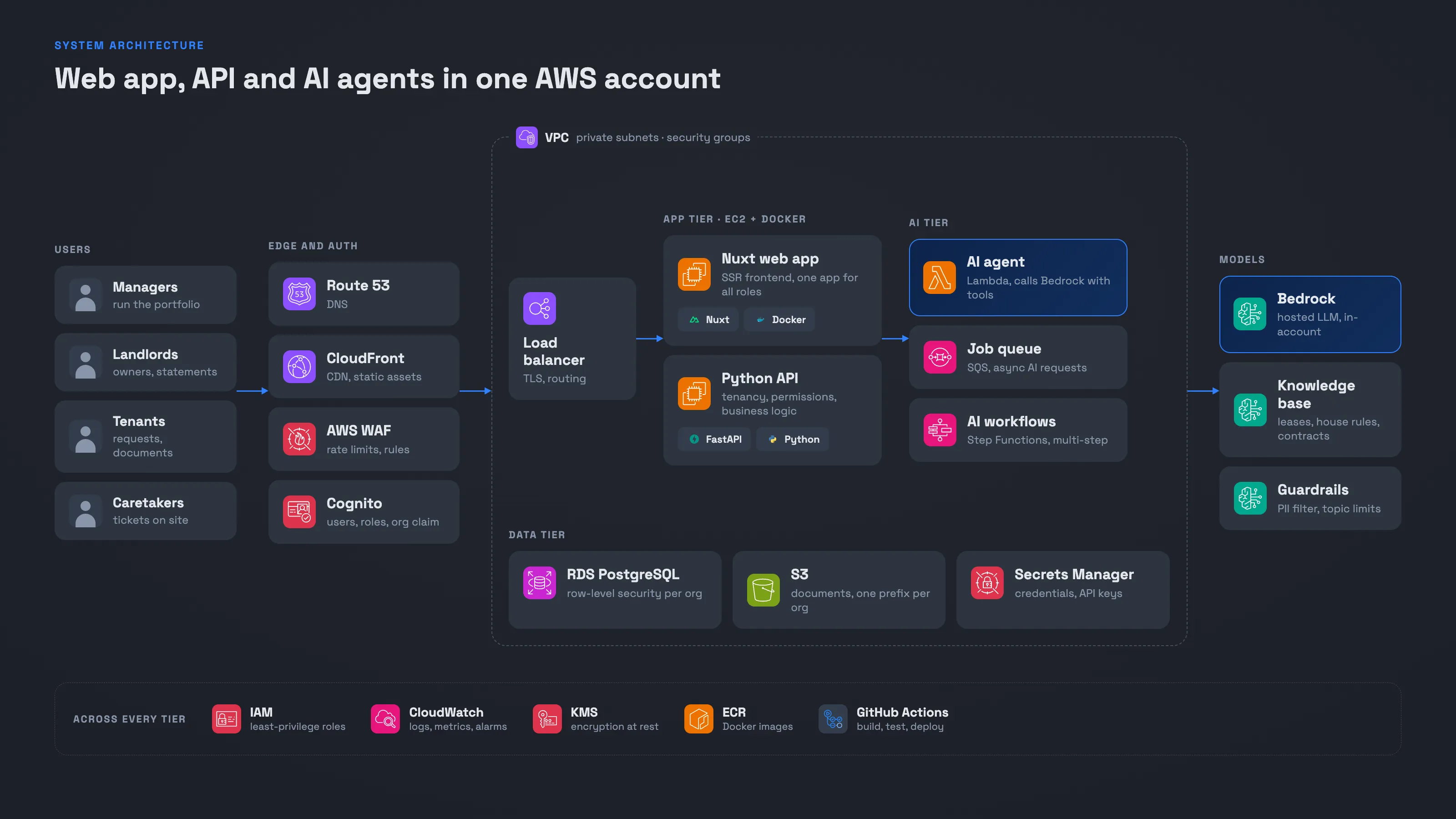
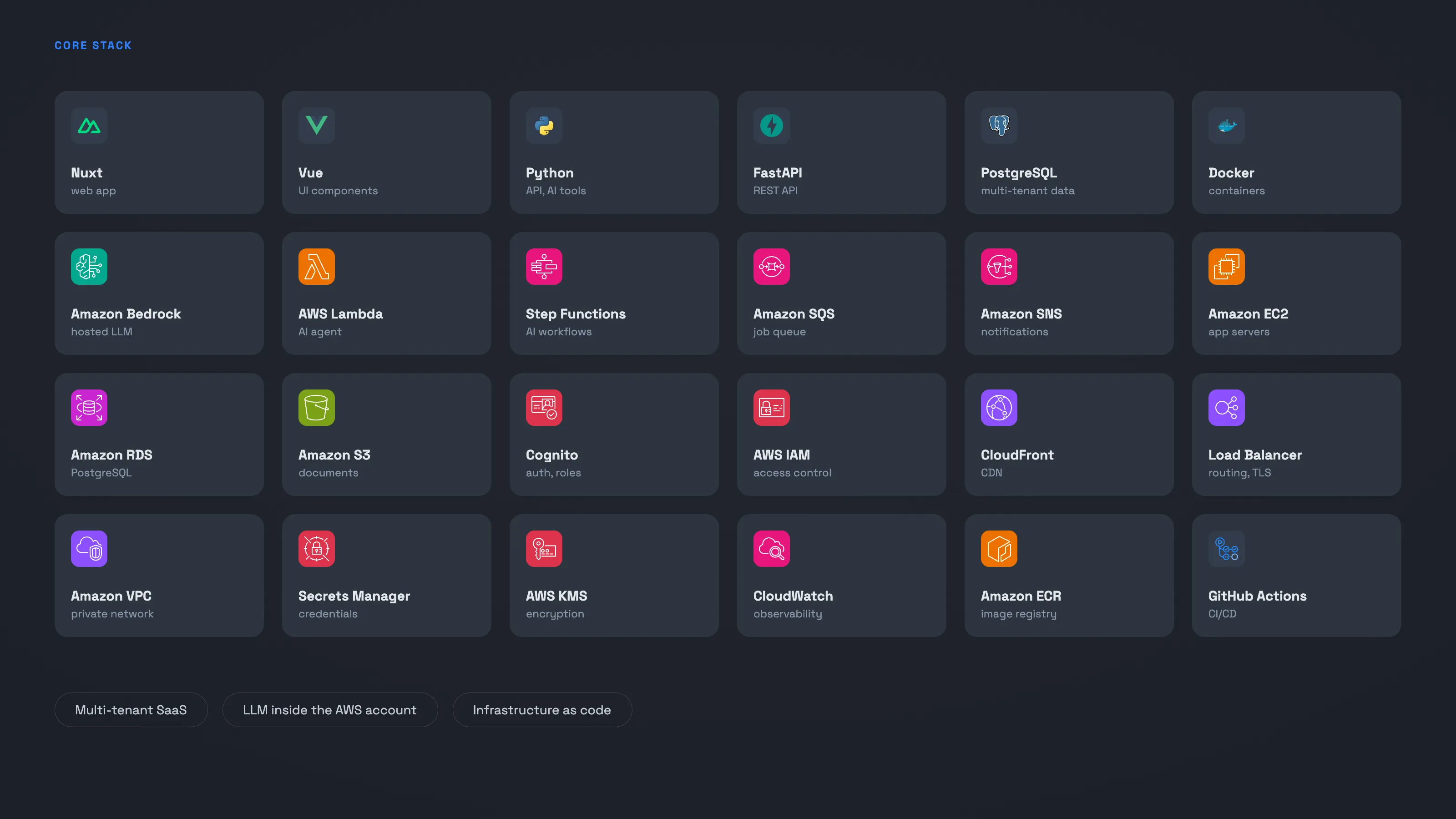
I designed the platform as a multi-tenant SaaS on AWS. A Nuxt web app and a Python API run in Docker on EC2 inside a private VPC, behind CloudFront and a load balancer. Cognito issues tokens with a role and an organisation ID, and that ID follows every request down to PostgreSQL row-level security and per-organisation S3 prefixes.
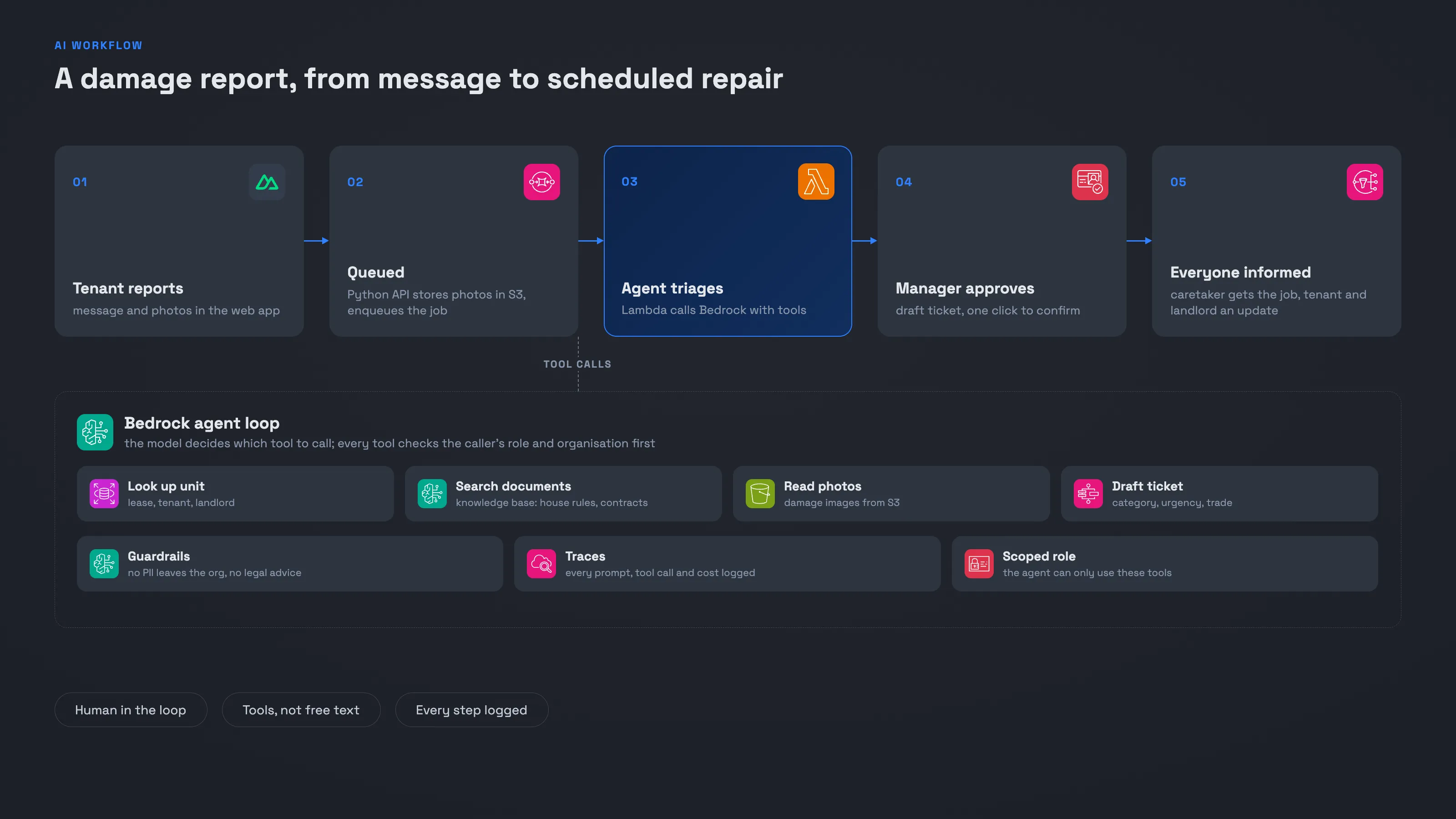
On top sits the AI layer. The API puts requests on an SQS queue, a Lambda agent calls Bedrock and works through a set of tools: look up the unit, search the documents, read the photos, draft the ticket. Step Functions run the longer workflows, including the approval step where a property manager confirms before anything is sent.
Everything is observable in CloudWatch, from API latency to every prompt, tool call and token cost, and the whole stack is shipped through GitHub Actions.
Multi-tenancy
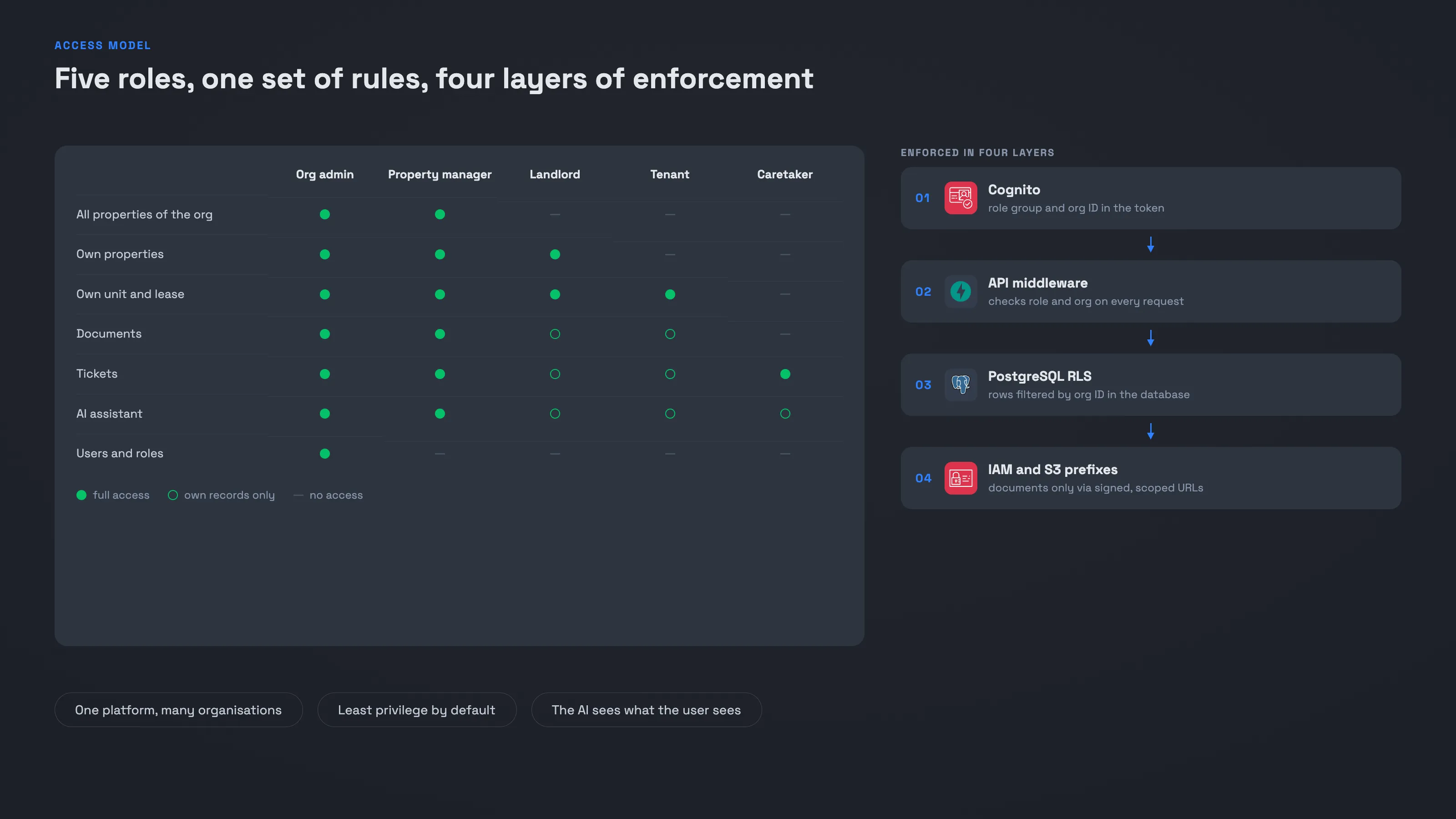
Each property management company is its own organisation. Within it, five roles see different slices of the same data, and the AI assistant only ever sees what the current user is allowed to see.
Access is enforced in four layers rather than trusted to one, so a bug in the app alone cannot leak another organisation's data.
Technology











Other case studies worth a look
Working on something similar?
Tell me what you run today and where it hurts. I will come back with how I would build it, and what I would leave alone.
Discuss your project